
Early diagnosis helps support healthy visual development and eye coordination.
The sooner the problem is detected, the greater the chance of successful treatment and improvement in visual function.
Eye conditions
Squint is a condition in which the eyes do not point in the same direction and cannot work together as they should.
One eye may turn inward, outward, upward or downward.
The brain may then be unable to combine the images from both eyes correctly, which can affect both visual quality and healthy visual development.
Correct eye alignment depends on coordination between the eye muscles and the brain. If this coordination does not work properly, squint develops.
Squint may be constant, intermittent, related to fatigue or present only when looking at near or distant objects.
In children it is important to detect squint as early as possible, because if left untreated it can also lead to amblyopia.
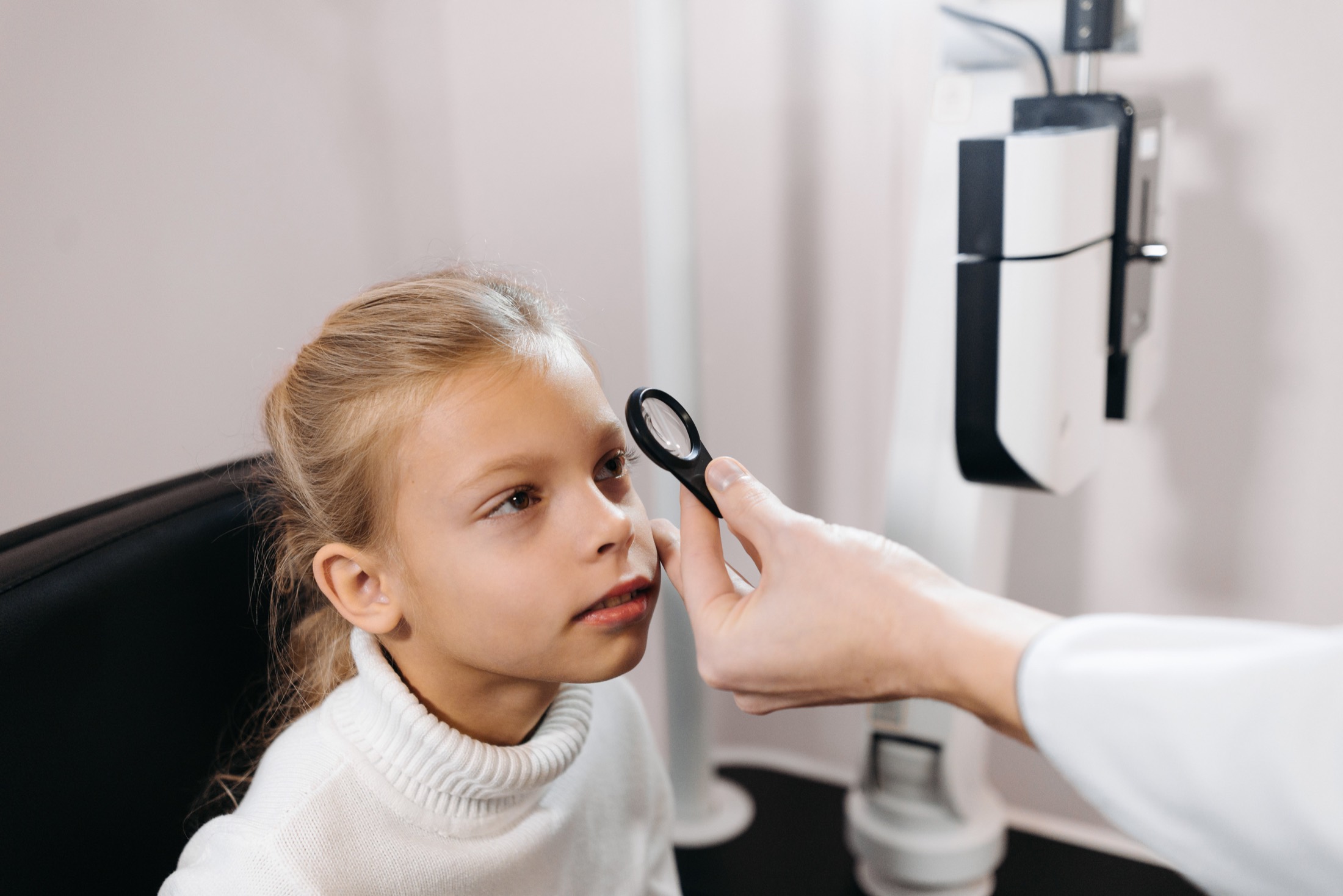
Some children may not realise there is a problem, so it is important to notice even subtle signs in everyday life.
Early diagnosis helps support healthy visual development and eye coordination.
The sooner the problem is detected, the greater the chance of successful treatment and improvement in visual function.
Treatment depends on the type and cause of the squint. It may include orthoptic and pleoptic exercises as well as other approaches:
The goal of treatment is to improve eye coordination, support healthy visual development and reduce visual strain.
Book an eye examination and our team will be happy to guide you.